
Malaysia's 2027 Budget After Official Announcement: Higher Education and University Housing Allocations and their Impact on International Students
After the official announcement of Malaysia's 2027 budget on October 9, we highlight the most prominent allocations for higher education, university development and student housing, and clarify what the new decisions mean for Saudi and Arab students wishing to study in Malaysia, while clarifying the reality of scholarships and university fees.
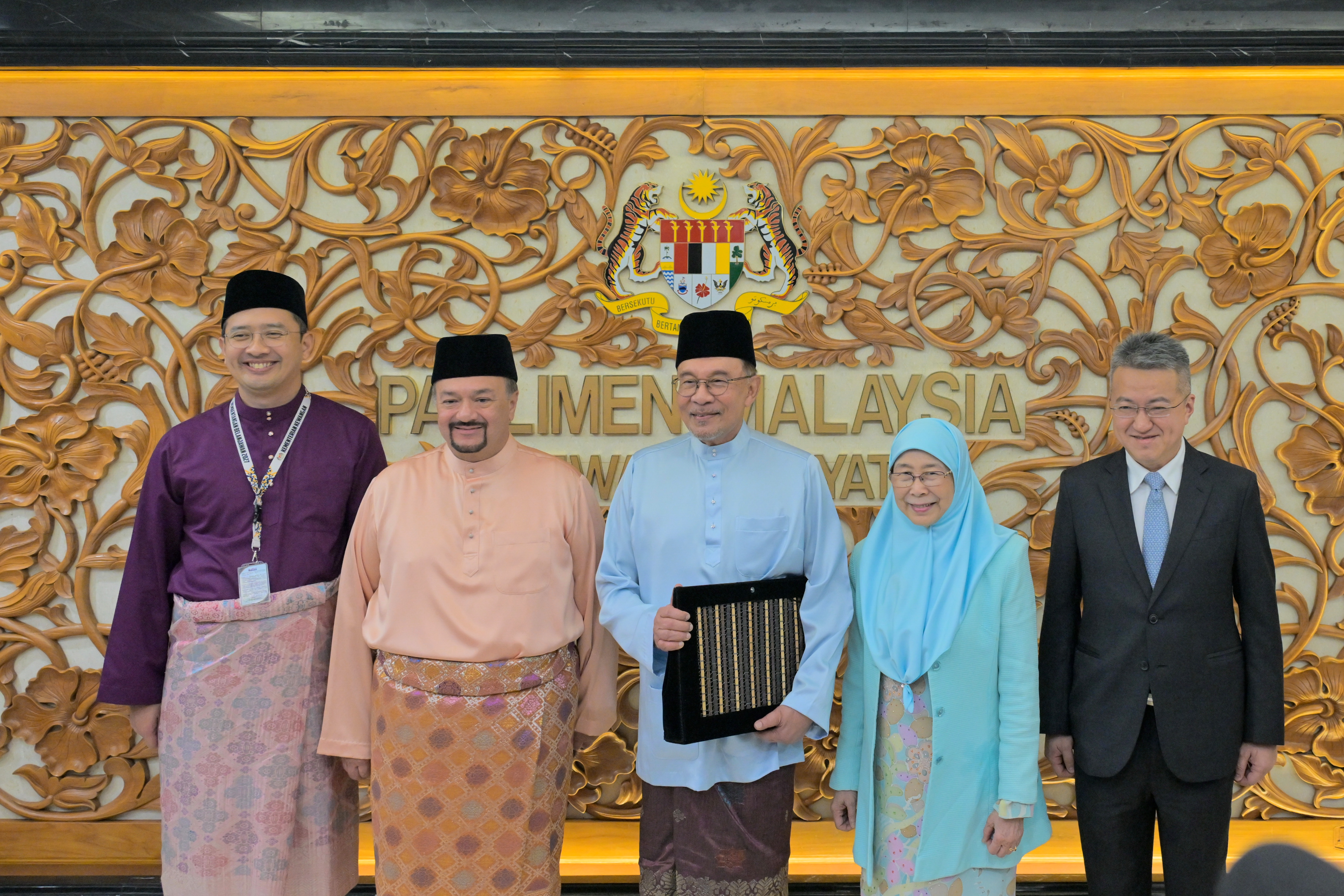
Malaysia budget 2027 after official announcement: What does it mean for international students?
Publishing date: 12 October 2026
The Malaysian government officially announced the 2027 budget on 9 October 2026, including new decisions related to higher education, university development government, improving student housing, and supporting student well-being.
One of the highlights of the budget was the increase in the allocations of the Malaysian Ministry of Higher Education to 19.1 billion ringgit, as well as the allocation of 800 million ringgit to develop public university facilities, launch initiatives to improve university housing and support some student groups.
This article is a continuation of our previous article that addressed the projections for Malaysia's 2027 budget prior to the official announcement. You can readour previous article on Malaysia's Budget 2027to see the forecasts that preceded the announcement.
1. Increase Malaysia's higher education budget to RM19.1 billion
One of the most notable decisions announced in Malaysia's 2027 budget is to increase allocations to the Malaysian Ministry of Higher Education (MOHE) to RM19.1 billion, compared to RM18.6 billion Repealed in the 2026 budget.
The increase is about RM500 million, which is approximately 2.7% compared to the previous year.
According to the statement of the Malaysian Ministry of Higher Education issued on 10 October 2026, the new allocations are distributed as follows:
- 15.13 billion ringgit:for operational expenses.
- RM3.96 billion:for development expenditures.
- RM800 million:for the development of public university facilities, including lecture halls, student accommodation and replacement of obsolete equipment.
These allocations are part of the Malaysian government's drive to improve the quality of higher education, promote scientific research and innovation, and improve the infrastructure of educational institutions.
What does a budget increase mean for international students?
International students may indirectly benefit from the development of university facilities and services, especially if they study at universities covered by government projects.
Investment in infrastructure, technology and scientific research can also contribute to improving the learning environment.

2. New University Housing Development Projects
Housing is one of the most important factors a student should consider when planning to study in Malaysia, especially when moving to and staying in a new city for a long time.
The 2027 budget included projects aimed at enhancing the accommodation capacity of student housing and improving accommodation facilities at a number of public universities.
Notable among these projects are:
University of Malaya Housing Project
The government has announced the Residensi Mahasiswa project at the University of Malaya (Universiti Malaya), with a target to complete the project in 2031, with a spice capacity There are about 10,000 students.
The project is expected to enhance the housing options available to university students upon completion.
Project Vista Kampus
The announcement also included a 750 million ringgit investment from the Malaysian Retirement Fund (KWAP) within the Vista Kampus project, to develop student housing at six selected universities, including:
- [[___
- Sultan Zainal Abidin University (UniSZA).
- Mara University of Technology (UiTM).
These projects reflect the government's interest in improving student housing and developing public university facilities.
Does this mean that housing will become cheaper for international students?
The announcement of new housing construction does not necessarily prove that there is a general reduction in rents, nor does it guarantee that all international students will have university rooms.
Access to these projects depends on the university in question, housing allocation policy, admission requirements, and room availability.
Therefore, students are advised to check housing options, prices and conditions before completing registration, and not to assume that government projects will automatically result in lower accommodation costs in all Malaysian cities.
3. Supporting student well-being and low-cost meal programs
Malaysia's 2027 budget included initiatives aimed at improving student well-being and relieving some of the daily burdens on beneficiary groups.
Notable among them is the continuation of the Dapur Siswa Madani program, with its expansion to include polytechnics and teacher training institutes, as well as public universities.
The program has been allocated RM20 million, to support the provision of cooking equipment, food and student meals within the Menu Kasih Siswa program at a price of RM5.
The program aims to help beneficiary students obtain meals at relatively low prices, thus reducing part of the cost of living.
Can international students benefit from meals priced at RM5?
It should not be assumed that all international students are eligible for the program.
The official announcement clarifies the targeted institutions and initiatives, but it does not prove a general eligibility for all international students.
If you are planning to study at a Malaysian public university, it is best to reach out to the university to find out if these initiatives are available to you, and what conditions govern their utilization.
4. Has Malaysia announced new scholarships for international students?
This is one of the most important questions for Saudi and Arab students wishing to study in Malaysia.
As higher education allocations increase, some students may expect to announce new scholarships or financial support to help them cover university fees.
But we must differentiate between increasing the higher education budget and announcing a new scholarship program.
If you are looking for a scholarship, we recommend that you check the following options:
- Grants announced independently by Malaysian universities.
- Academic excellence discounts available to international students on the terms of each university.
- Grant programs offered by government agencies and donor institutions in your country.
- Discounts and offers announced by universities and language institutes during registration periods.
Before deciding to register, check the value of the grant, the fees it covers, how long it will be used, the conditions for its continuation, and whether it is available to students of your nationality.
Beware of ads that promise blanket grants or free study in Malaysia just because the 2027 budget is released, unless those claims are supported by an official announcement.
5. Will tuition fees fall in Malaysia in 2027?
So far there is no announcement in the budget letter and statement of the Ministry of Higher Education that we have reviewed of a comprehensive tuition reduction for all international students.
The government has allocated funds for the development of universities and their facilities, but this does not mean that universities will automatically reduce the prices of their programs.
Tuition fees vary according to several factors, the most important of which are:
- The university or educational institution.
- Specialization and Stage.
- Academic Program Duration.
- Administrative and registration fees.
- Program Requirements, Laboratories and Practical Training.
- Grants and discounts a student may receive.
Fees also vary between public and private universities, and it cannot be assumed that all educational institutions will follow a single pricing policy.
Our advice:Do not postpone the study decision depending on the expectation of lower fees in 2027. Ask for a formal offer that shows the full cost of the program, compare universities, and check available discounts before making a decision.
If a particular university announces a new discount or grant, the terms and duration of the offer and the programs covered therein should be reviewed separately.
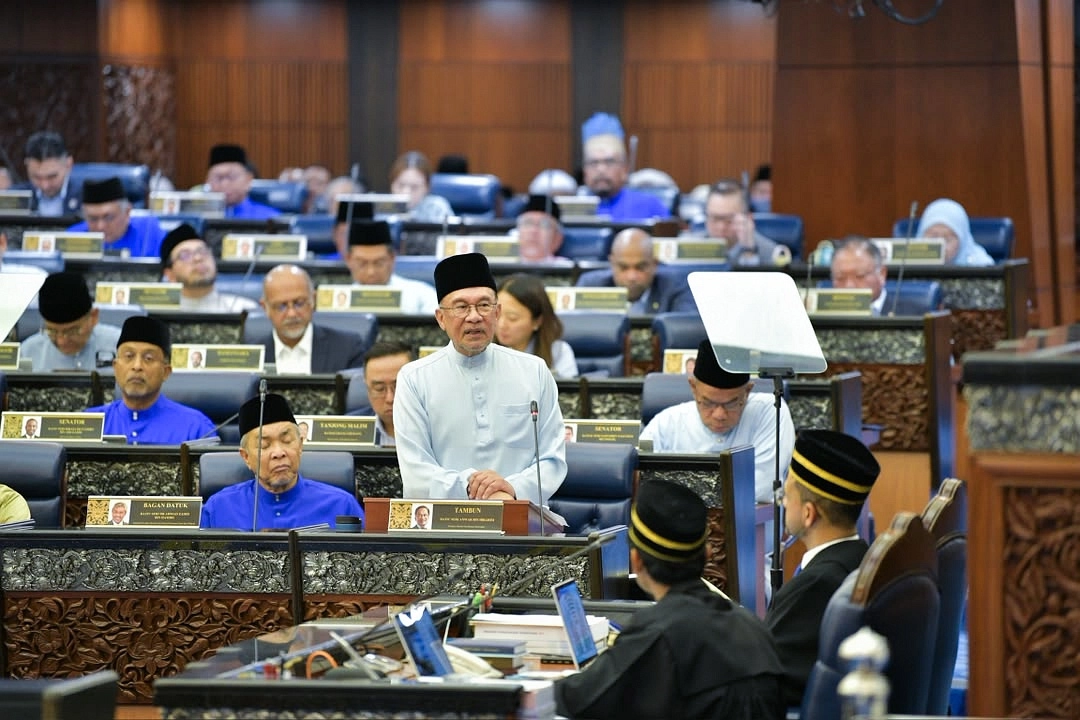
6. PTPTN Loan Facility: Do international students benefit from it?
The 2027 budget included procedures related to the loans of the Malaysian National Higher Education Fund (PTPTN), with the aim of easing the repayment burden on some borrowers.
According to the announcement published by the Ministry of Higher Education, the procedures include:
- Postponement of loan repayment starting from 2027 for borrowers whose monthly income does not exceed RM2,500.
- Set a minimum repayment of RM50 per month for borrowers whose monthly income is between RM2,500 and RM3,000.
- Offer a 10% loan repayment discount to borrowers who are not in arrears and commit to regular repayment.
It is expected that these actions will benefit categories of eligible borrowers on the stated terms.
ButThese actions do not mean that international students will receive new tuition loans or waivers from university fees.
Eligibility for PTPTN programs is linked to the conditions of the Fund and the funding system in place, so international students should not automatically consider these measures as support available to them.
For Saudi and Arab students, it is best to focus on scholarships and discounts that actually accept international students, along with financial planning before starting school.
7. Does the budget support technical disciplines and artificial intelligence?
Malaysia's 2027 budget confirms the government's continued interest in innovation, technology and the knowledge-based economy.
In his address, the Prime Minister emphasized the opportunities associated with sectors such as:
- Artificial Intelligence.
- Semiconductors.
- Digital Economy.
- New Energy.
- High value-added industries.
The Ministry of Higher Education also stressed the importance of talent development, research, innovation and enhancing the competitiveness of graduates.
A related initiative is the allocation of RM50 million to establish the University-Industry Venture Capital Fund (UNIVC) in cooperation with the Malaysian Pension Fund, with the aim of supporting the transformation of university research results into foldable applications and projects Commercial.
These orientations can be useful for students considering technical, engineering, or scientific disciplines.
But it is important not to confuse sector-specific support with ensuring that its graduates get jobs.
When choosing a major, the quality of the program, academic accreditation, curriculum, training opportunities, and graduate skills required in the labor market should be considered.
Working and residency conditions must be verified after graduation; studying in Malaysia does not automatically mean obtaining a work permit or permanent residence.
8. How does Malaysia's 2027 budget affect the Arab student's decision?
For Saudi and Arab students planning to study in Malaysia, the budget provides useful information on trends in the development of higher education, but it does not replace the study of options available to each student individually.
Here are the most important practical steps we recommend:
First: Select the major and grade
Select if you want to study English, Bachelor, Master, or PhD
Next, find programs that match your academic qualifications, budget, and career goals.
Second: Compare universities and official fees
Don't rely on advertising price alone.
Request details of tuition fees, enrollment fees, additional costs, program duration, and admission requirements.
If you get a discount or bonus offer, check its value, the duration it covers, and the conditions associated with it.
Third: Calculate living costs
Student's personal budget includes:
- Tuition fees.
- Housing.
- Food and transportation.
- Health Insurance.
- Visa fees and related procedures.
- Personal Expenses and Emergency Needs.
The budget should not be built on the assumption that housing or food will become cheaper as a result of government initiatives before making sure they are eligible.
Fourth: Check grants before registering
If you are looking for a scholarship, contact your university or donor directly.
and request a written confirmation stating the amount covered, its terms, and whether it is available to international students of your nationality.
Fifth: Start the admission procedure early
Admission dates, document requirements and visa vary by university and program.
So, getting started early helps you get your paperwork ready, compare options, and organize your budget without rushing.
9. How does IISTUDY help you choose the right study?
At IISTUDY, we help Saudi and Arab students learn about study options in Malaysia, compare universities and language institutes, and choose programs that match their qualifications and budgets.
You can contact us to inquire about:
- Malaysian universities and available majors.
- Admission and tuition requirements.
- Grants and discounts announced by educational institutions.
- University registration and admission procedures.
- Student visa procedures in coordination with the concerned authorities.
- Accommodation and airport pickup options.
We make sure to clarify details regarding the program, fees, and services before starting the registration procedure.
If you plan to study in Malaysia during 2027, you can reach out to the IISTUDY team to discuss options that are right for you.
Start your study journey in Malaysia with IISTUDY.
Website:https://ii-study.com/ar
Whatsapp 1: 0060149492017
Whatsapp 2: 00601160807699
or contact us directly via theWhatsapp hyperlinks I here.
Conclusion: What does Malaysia's 2027 budget mean for international students?
Malaysia's 2027 budget reflects continued government investment in higher education, by raising allocations to the Ministry of Higher Education to RM19.1 billion, and allocating RM800 million for the development of public university facilities, along with Jedi projects This is for university housing and initiatives to support student well-being.
The budget also includes actions associated with PTPTN loans, investments in scientific research and innovation, and trends that support the development of technical and technological skills.
But for international students, it is necessary to distinguish between initiatives dedicated to specific categories and programs available to all international students.
As of the date of this article, we have not found in the budget letter and statement of the Ministry of Higher Education that we reviewed an announcement of a new public scholarship covering all international students, or an overall reduction in tuition fees.
Therefore, the best way to take advantage of new information is to choose the right university, compare official fees, and check the conditions for grants, discounts, and housing before deciding to enroll.
Are you planning to study in Malaysia in 2027?Follow the IISTUDY blog for university news, scholarships, and higher education updates, and reach out to us for information to help you plan your study trip.
Official Sources and References
Star Magazine. (2026, October 9).Budget 2027: 'We are not building a nation for one fiscal year, but for a generation', says PM Anwar
- https://www.thestar.com.my/news/nation/2026/10/09/budget-2027-039we-are-not-building-a-nation-for-one-fiscal-year-but-for-a-generation039-says-pm-anwar
- Ministry of Malaysian Higher Education. (2026, October 9).Belanjawan Madani 2027: KPT Terima RM19.1 Bilion, Reformasi Pendidikan Tinggi dan Kebajikan Mahasiswa Diberi Tumpuan.
- https://mohe.gov.my/en/broadcast/activities/belanjawan-madani-2027-kpt-terima-rm19-1-bilion-reformasi-pendidikan-tinggi-dan-kebajikan-mahasiswa-diberi-tumpuan
- Ministry of Higher Education Malaysia. (2026, 10 October).Siaran Media: Belanjawan Madani 2027 — Sektor Pendidikan Tinggi Negara Terus Diperkukuhkan.
- https://www.mohe.gov.my/hebahan/kenyataan-media/siaran-media-belanjawan-madani-2027-sektor-pendidikan-tinggi-negara-terus-diperkukuhkan