Cultural diversity in Malaysia
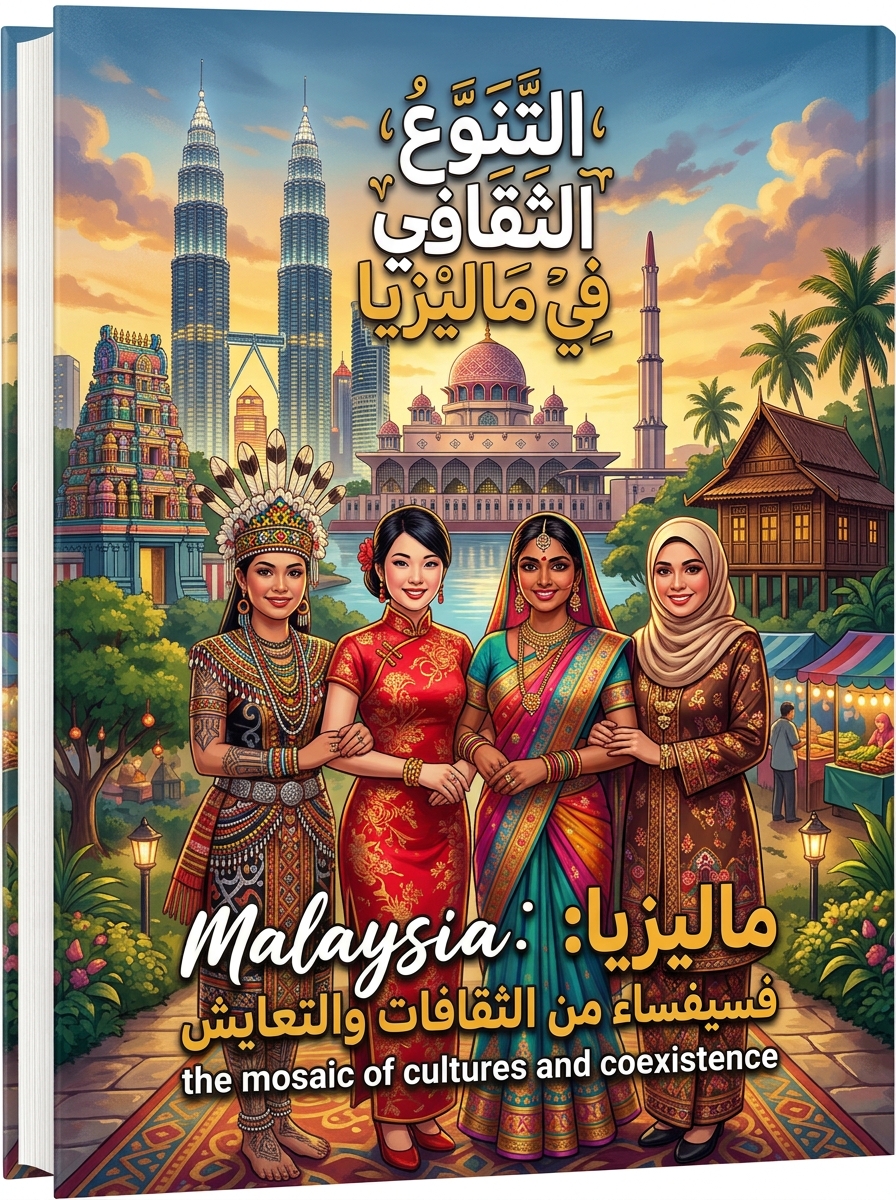
Malaysia is considered one of the most beautiful living Asian models of human harmony and cultural coexistence, to the point that it has become known as “Mini Asia.” In this country located in the heart of Southeast Asia, culture was not formed from a single source, but rather resulted from an ancient fabric forged over long centuries of historical interaction between the Malays, Chinese, Indians, and indigenous groups in the peninsula and East Malaysia (Sabah and Sarawak). This unique diversity is evident in all aspects of daily life. Starting from the linguistic and religious diversity in which the minarets of mosques blend with the towers of temples and churches, to the richness of Malaysian cuisine with diverse foods, the multiplicity of festivals, traditional dress and architectural arts. Under its famous slogan “Malaysia, Truly Asia”, Malaysia offers an exemplary experience of the concept of “Unity in Diversity”, an experience that makes this country an open cultural theater and an exceptional destination for international visitors and students from different parts of the world.
Cultural diversity in Malaysia
Malaysia is one of the most prominent Asian examples of cultural diversity and coexistence among multiple ethnic, religious and linguistic groups.
Contemporary Malaysian culture was not formed from a single source, but rather resulted from centuries of interaction between the Malays, Chinese, Indians, and indigenous groups in the Malaysian Peninsula, in addition to the indigenous peoples in my state. Sabah and Sarawak, and Arab, Persian, European, Indonesian and other historical influences.
Official Malaysian tourism sources indicate that this diversity clearly appears in religions, languages, foods, festivals, customs, arts and traditional clothing, which is what made Malaysia presented globally under the slogan "Malaysia, Truly Asia".
https://www.tourism.gov.my/campaigns/view/malaysia-truly-asia?utm_source=chatgpt.com
Malaysia is also a prominent example of cultural diversity in Southeast Asia. Malaysian society is described as “mini Asia” as a result of the unique coexistence of different races, religions and cultures.
First: Why is Malaysia characterized by this cultural diversity?
Malaysia's cultural diversity is linked to its history and geographical location. The region was part of important maritime trade routes in Southeast Asia, making it a point of contact between different Asian civilizations.
The region also witnessed historical interactions with China, India, and the Arab world, and then with European powers, including the Portuguese, Dutch, and British. The Malaysian Ministry of Foreign Affairs explains that the development of Malaysian society was influenced by long interactions with various regions of the world, in addition to the Portuguese, Dutch and British colonial periods.
https://www.kln.gov.my/web/chl_santiago/post/ma-2?utm_source=chatgpt.com
Therefore, current Malaysian culture can be viewed as a multi-layered cultural fabric; The different groups retained a large part of their identity, and at the same time there were clear mutual influences in food, language, arts, architecture, and daily customs.
https://en.wikipedia.org/wiki/Culture_of_Malaysia?utm_source=gemini
The population fabric in Malaysia consists of three main ethnic groups in addition to the indigenous people
Second: Malay culture
They constitute more than half of the population, speak the Malay language (Bahasa Malaysia) and practice Islam, which is the official religion of the country.
Malay culture represents one of the most important components of Malaysian cultural identity.
This culture appears in:
- Malay language.
- Traditional clothes.
- Malay cuisine.
- Arts and music.
- Traditional dances.
- Social customs.
- Religious and social celebrations and events.
- Traditional architecture.
Among the most famous traditional clothes are Baju Melayu for men and Baju Kurung for women, which are clothes associated with formal, religious and social occasions.
Hari Raya Aidilfitri is also one of the most important occasions in the Malay Muslim community, when families gather, visits are held and traditional foods are served.
Tourism Malaysia confirms that Malaysian culture is not limited to one group, but rather the diversity of foods, languages, festivals and traditions represents an essential part of the cultural experience in the country.
https://www.tourism.gov.my/campaigns/view/malaysia-truly-asia?utm_source=chatgpt.com
Third: Chinese culture in Malaysia
They constitute about 21% of the population, and most of them trace their origins back to the migrations of the late nineteenth century. They speak several dialects, such as Hokkien, Cantonese, and Mandarin, and practice Buddhism, Taoism, and Christianity.
Malaysians of Chinese origin also constitute an important component of Malaysian society, and have contributed significantly to shaping the economic, cultural and social life in the country.
Malaysian Chinese culture appears in many areas, including:
the language
Several languages and dialects are spoken within the Malaysian Chinese community, including:
- Mandarin
- Cantonese
- Hokkien
- Hakka
- Teochew
English and Malay are also widely used in daily life, education and work.
holiday
Chinese New Year is one of the most prominent cultural events in Malaysia.
It spreads during celebrations:
- Red lanterns.
- Lion and dragon dances.
- Family gatherings.
- Giving gifts.
- Family visits.
- Traditional foods.
These celebrations are clearly visible in major cities such as Kuala Lumpur, Penang, Ipoh and Malacca.
Fourth: Indian culture in Malaysia
Malaysians of Indian descent represent another important component of Malaysia's cultural diversity, of which the Tamil community is one of the most prominent components.
Indian culture has had a clear impact on:
- Food.
- Clothes.
- Music.
- Dance.
- Festivals.
- Temples.
- the language.
- Arts.
One of the most prominent occasions is Deepavali - Deepavali is an important festival for Hindus, and celebrations are characterized by lights, decorations, traditional clothing, and family gatherings.
One of the most famous sites associated with Indian culture in Kuala Lumpur is the Little India area in Brickfields, where restaurants, shops, Indian clothing, music and traditional products can be seen.
Thaipusam is also a prominent Hindu holiday, and its celebrations are famous in the Batu Caves area near Kuala Lumpur.
Fifth: Indigenous cultures in Malaysia
One of the most important aspects that makes Malaysian culture so diverse is the presence of a large number of indigenous communities, especially in... Sabah and Sarawak In eastern Malaysia.
These regions include multiple ethnic and cultural groups, each with its own history, languages, arts and customs.
Among the most famous are:
- Iban
- Kadazan-Dusun
- Bidayuh
- Bajau
- Murut
- Orange Ulu
- Orang Asli
and indigenous groups in Peninsular Malaysia.
Some of these cultures are characterized by traditional clothing with distinctive designs, handicrafts, beads, folk music, traditional dances, and the use of musical instruments such as drums, bells, and metal bells.Gong.
Tourism Malaysia notes that the indigenous communities of Sabah and Sarawak represent an essential part of Malaysia's diverse cultural landscape.
https://www.malaysia.travel/about-malaysia?utm_source=chatgpt.com
Religious diversity is one of the most visible manifestations of multiculturalism in Malaysia.
Islam is the official religion of the state, while other religions are practiced, including:
- Buddhism.
- Hinduism.
- Christianity.
- Sikhism.
- And other religious beliefs and traditions.
Official Malaysian sources state that Islam is the official religion, with other religions being practiced freely.
That is why a visitor in Malaysian cities can see, sometimes in close areas, Mosques, Buddhist temples, Hindu temples and churchesIt is a scene that reflects the history of the multicultural society.
Seventh: Multilingualism in Malaysia
Malay language Bahasa Melayu It is the national language, but Malaysian society is highly multilingual.
English is widely used, along with different languages and dialects, including:
- Mandarin
- Cantonese
- Tamil
- Hokkien
- Hakka
- Iban
- Kadazan-Dusun
- And other local languages.
The Malaysian Tourism Authority points out that many Malaysians speak more than one language, and that English is widespread alongside the national language and various languages and dialects.
This linguistic diversity gives Malaysian society a great ability to communicate between different cultures, and also represents an important advantage in the education, business and tourism environment.
https://www.malaysia.travel/about-malaysia?utm_source=chatgpt.com
Eighth: Cultural diversity appears strongly in Malaysian food
If we want to learn about the cultural diversity in Malaysia,... Food is probably one of the best examples.
Malaysian cuisine combines influences from Malay, China, India and the peoples of Southeast Asia.
Among the well-known foods are:
Malay cuisine
- Nasi Lemak
- Rendang
- Satay
- Laksa
Malaysian Chinese cuisine
- Char Kway Teow
- Hainanese Chicken Rice
- Dim Sum
- Some types of noodles and seafood dishes.
Malaysian Indian cuisine
- Roti canai
- Nasi Kandar
- Banana Leaf Rice
- Different types of curry.
This is why Tourism Malaysia describes Malaysia as... "Food Paradise"There is a variety of Malay, Chinese, Indian and other cuisines.
https://www.tourism.gov.my/campaigns/view/malaysia-truly-asia?utm_source=chatgpt.com
Ninth: Festivals and holidays in Malaysia
Festivals are perhaps one of the most beautiful manifestations of cultural diversity in Malaysia.
Among the most prominent occasions:
Appropriate cultural connection
Hari Raya Aidilfitri Muslims
Chinese New Year Chinese community
Deepavali Hindus
Christmas Christians
Thaipusam Hindu community, especially Tamils
Wesak Day Buddhists
Gawai Dayak Some Sarawak communities
Tadau Kaamatan Sabah communities, especially Kadazan-Dusun
And in a year 2026Within the Visit Malaysia 2026 programme, Tourism Malaysia highlights a number of cultural celebrations, including the Chinese New Year, Eid al-Fitr, Deepavali and Christmas festivals, in addition to... Tadau Kaamatan and Gawai Dayak.
Effectiveness has also returned Citrawarna 2026 – Colors of Malaysia To celebrate national arts, heritage, culture and diversity through musical performances, dances and cultural marches.
Tenth: Traditional clothing - a living exhibition of Malaysian cultures
Malaysia's cultural diversity can be easily seen through traditional clothing.
Each society has distinctive clothing, designs, colors and materials, such as:
Malay:
Baju Melayu and Baju Kurung. It is the traditional dress of the Malays.
Malaysian Chinese:
Cheongsam: The elegant traditional dress of Chinese culture.
Chinese traditional clothing, especially during occasions and celebrations.
Malaysian Indians:
Saree and kurta: traditional Indian dress.
Saree, Kurta and other traditional Indian clothes.
The indigenous people of Sabah and Sarawak:
Clothes featuring motifs, beads, colors and designs specific to each group.
Traditional clothing is especially used in national celebrations and cultural festivals, which makes Malaysian events more like an "open cultural theatre."
Eleventh: Arts, music and dance
Malaysia is also distinguished by its diversity of traditional arts.
Its most prominent elements are:
- Malay dance.
- Chinese dances.
- Indian dances.
- Indigenous dances.
- Traditional music.
- Popular theatre.
- Handmade arts.
- Textile industry.
- Bead making.
- Wooden crafts.
The arts are used in national occasions, festivals, tourism and cultural events.
Tourism Malaysia confirms that events such as Citrawarna Music, dance, arts and different customs combine in one celebration that reflects the country's cultural diversity.
https://www.tourism.gov.my/media/view/the-many-colours-of-malaysia?utm_source=chatgpt.com
Twelfth: Architectural and cultural heritage
Cultural diversity appears not only in people and customs, but also in... Cities, buildings and historical sites.
The most famous examples are:
George Town - Penang
Known for its multicultural historical heritage, the city includes historic buildings, houses, temples, mosques and churches that reflect the development of the trading community in the Malacca Strait region.
Melaka
It is characterized by a long history of interaction between different cultures and civilizations.
It has been included Melaka and George Town, Historic Cities of the Straits of Malacca Included in the UNESCO World Heritage List in 2008.
https://whc.unesco.org/en/statesparties/my?utm_source=chatgpt.com
Thirteenth: Cultural diversity in daily life
One of the most beautiful features of the Malaysian experience is its cultural diversity Not just a tourist showIt appears in everyday life.
In Malaysian cities you can find:
- Malay restaurants next to Indian and Chinese restaurants.
- Mosques near temples.
- People who speak more than one language.
- Neighborhoods with a distinct cultural character.
- Multiple religious and cultural celebrations throughout the year.
- Schools and universities with students from different backgrounds.
- Markets offering products and foods from multiple cultures.
This makes Malaysia an important model for studying how different cultures interact within a single society.
Fourteenth: Cultural diversity and international students
This diversity is an important aspect for international students studying in Malaysia.
The student coming to Malaysia does not live in one cultural environment, but rather can learn about multiple Asian cultures in his daily life.
This can help the student develop:
- Intercultural communication skills.
- Ability to deal with people from different backgrounds.
- Understanding different customs and traditions.
- Language and communication skills.
- Openness to global cultures.
- Ability to adapt to an international environment.
Malaysian universities also receive students from different countries, which adds an international dimension to the educational environment.
Fifteenth: Malaysia is a model of “unity in diversity”
The Malaysian cultural landscape can be summarized in one important concept:
Unity in Diversity
The basic idea is not that all Malaysians have the same culture, but rather that a society can include multiple cultures with a common national identity.
This diversity appears in:
Race + Religion + Language + Food + Clothes + Music + Arts + Festivals + History + Architecture.
Malaysian official authorities describe the country as a multicultural and multiethnic society, where Malay, Chinese, Indian traditions and indigenous groups meet in a single social and cultural fabric.
https://www.malaysia.travel/about-malaysia?utm_source=chatgpt.com
Summary of the article
that The diversity of cultures in Malaysia is not just a collection of different customs, but rather an essential part of the country's character, history and society.
In Malaysia, a visitor or student can discover within a short period:
Malay culture
Chinese culture
Indian culture
Indigenous cultures
Islam
Hinduism
Buddhism
Christianity
Diverse Asian cuisine
Traditional arts and dances
Various festivals
Multilingualism
Architectural and historical heritage
That's why the phrase "Malaysia, Truly Asia" Directly related to this diversity; Official Malaysian tourism sources use it to express the combination of multiple Asian colours, cultures, foods and traditions within one country.
https://www.tourism.gov.my/campaigns/view/malaysia-truly-asia?utm_source=chatgpt.com
Reliable links on this topic
- Malaysia Tourism Board - Malaysia Truly Asia — Official information about Malaysian cultural, ethnic, linguistic diversity and cuisine.
https://www.tourism.gov.my/campaigns/view/malaysia-truly-asia?utm_source=chatgpt.com
- Official Tourism Malaysia website – People and Culture — Information about population, culture, languages and religions.
https://www.malaysia.travel/about-malaysia?utm_source=chatgpt.com
- Visit Malaysia 2026–2027 — Official 2026 program and cultural events.
https://www.malaysia.travel/page/visit-malaysia-2026?utm_source=chatgpt.com
- Citrawarna 2026 – Colors of Malaysia — Information about one of the most prominent cultural celebrations in Malaysia.
- UNESCO - Malaysia World Heritage Convention — Reliable information about World Heritage Sites in Malaysia.
https://whc.unesco.org/en/statesparties/my?utm_source=chatgpt.com
- Ministry of Tourism, Arts and Culture - Malaysia My Second Home — Official information about Malaysia's multicultural society.
https://www.mm2h.gov.my/?utm_source=chatgpt.com
- Encyclopedia Britannica - Popular and cultural diversity in Malaysia.
- Detailed Wikipedia article about Malaysian culture
Malaysia... Opportunities that go beyond studies, and a future that begins with a single step.
Are you thinking about Study, invest, tourism or discover Malaysian life and culture?
Let a team II Study Your guide to a clearer and more confident choice.
We provide you with information and guidance on:
Study, universities and educational programs
Investment and economic opportunities in Malaysia
The best destinations and tourist places
Malaysian culture, life and society
Housing and services that students need
Options and actions that help you plan better
Don't be satisfied with the information...get the advice that suits your needs.
Contact the team now II Study And get Free consultation, and let us help you find the options that suit your needs Your goals, needs and budget.
II Study
With you from the first step... until you make your choice with confidence.
Contact us now and start your journey to Malaysia with confidence Via WhatsApp 0060149492017 or Click here